
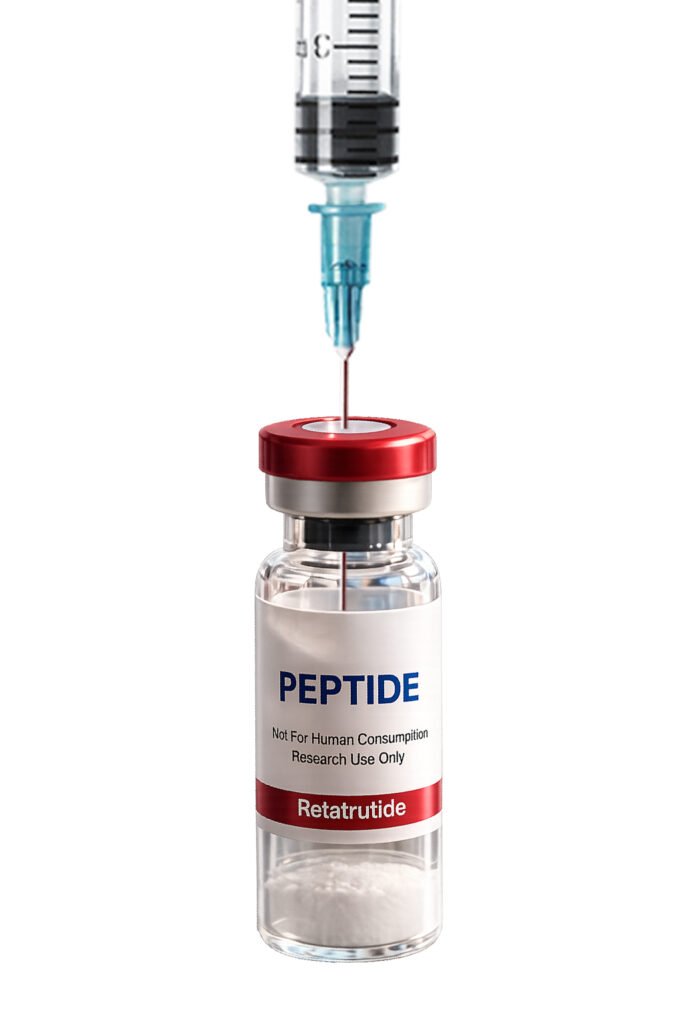
Reconstitution:
In the context of peptides, reconstitution means mixing a a sterile liquid (solvent) with a freeze-dried (lyophilized) peptide powder.
Reconstitution:
In the context of peptides, reconstitution means mixing a a sterile liquid (solvent) with a freeze-dried (lyophilized) peptide powder.
Why Do We Have To Reconstitute?
This is necessary because peptides are unstable in liquid over long periods, so they are freeze-dried for shelf life.
Why Peptides Come as Powder
Because amino acid chains are highly fragile, they can quickly degrade or break down when exposed to moisture, room temperature, and UV light. Manufacturers freeze-dry peptides into a powder (lyophilization) to preserve their structural integrity and shelf life for long-term storage.
A lyophilized peptide powder can last over a year at room temperature or for several years in a freezer.
The Process
Reconstitution involves combining this powder with a precise amount of a compatible liquid, most commonly bacteriostatic water (sterile water with 0.9% benzyl alcohol).
Solvent selection:
Bacteriostatic water is heavily preferred for extending usability, though specialized buffers or sterile water are sometimes used.
Handling:
Because peptides are fragile, the liquid must be added slowly to the side of the vial to avoid foaming. The vial is then gently swirled until dissolved; vigorous shaking can destroy the peptide bonds.
What Happens After Reconstitution?
Once mixed with liquid, the stability clock starts ticking.
Storage Requirements:
Reconstituted peptides must be strictly refrigerated (between 36°F and 46°F) and shouldn't be frozen.
Lifespan:
Depending on the specific peptide and the solvent used (e.g., Bacteriostatic water keeps vials stable for roughly 30-60 days), they have a limited usable window before they degrade. Quality holds relatively steady during this time, then, once degradation begins, quality drops of quickly with each passing day.
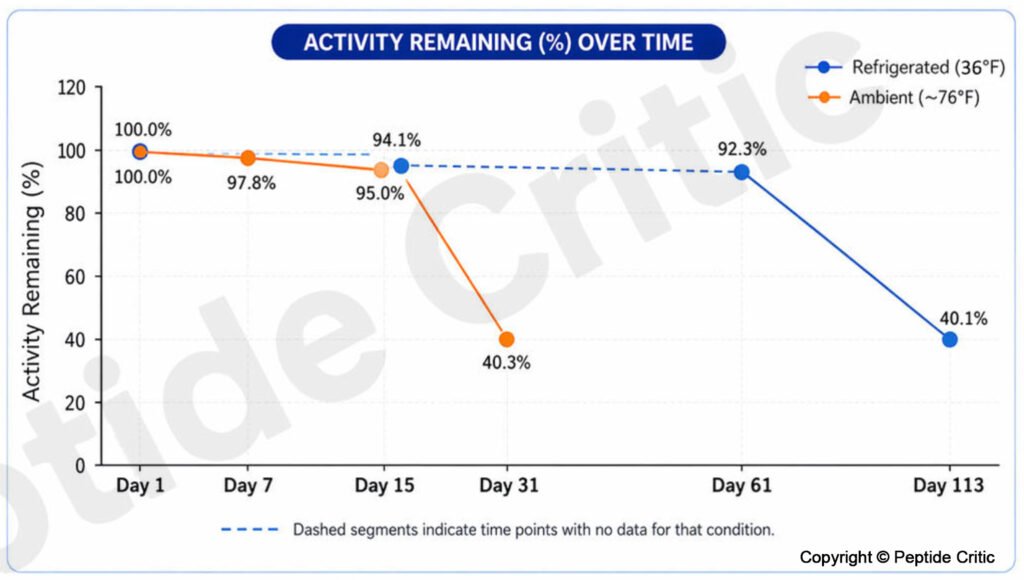
Here's an example of a reconstituted Tirzepatide sample's degradation timeline.
The orange line represents the peptide being left at room temperature, the blue represents the refrigerated sample. Notice how the peptide maintains its purity rather consistently until the critical day hits and it drops off rapidly. This is the case with most peptides.
What Size Vial To Purchase:
Because of cost/mg discounts when purchasing larger dose vials, it may be tempting to purchase a larger dose than can be safely used during the reconstituted lifespan mentioned above.
DON'T DO THIS!
Researchers should only purchase vial dosages that can be safely used up within the 30-60 day window.
For instance, if a researcher can use 15mg in 60 days, they should purchase two 10mg vials, as opposed to one 20mg vial. That way, they can reconstitute one and use it up in 40 days, while the other retains its full potency in lyophilized form.
Can I Freeze A Reconstituted Peptide?
NO! Some researchers falsely believe they can purchase a larger dose vial, reconstitute it, separate it into smaller vials, and freeze the vials they aren't using right away.
Never do this!
Freezing a reconstituted peptide damages the wet amino acid chains. The forming ice crystals, like knives, slice through the chains, destroying the peptide.
How To Reconstitute:
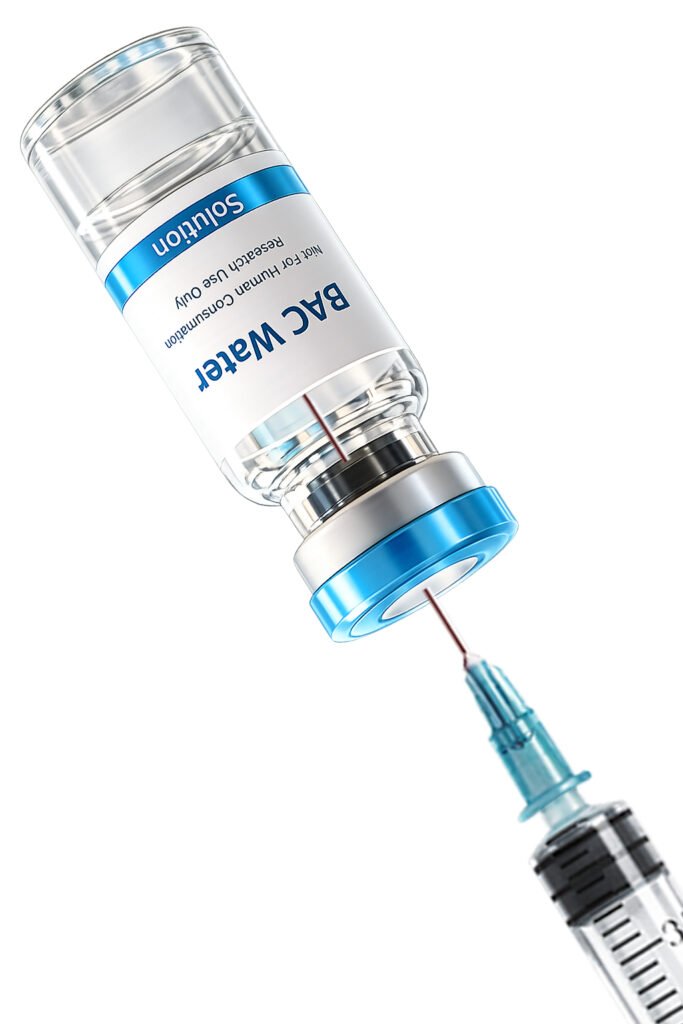
Withdraw The BAC Water
• Withdraw the needed amount of BAC water from the BAC vial.
• See "Volume Recommendations" below for the prescribed amount.
Withdraw The BAC Water
• Withdraw the needed amount of BAC water from the BAC vial.
• See "Volume Recommendations" below for the prescribed amount.
Insert The BAC Into The Peptide
• Insert the BAC syringe into the peptide.
• Caution: This vial should be vacuum sealed. So point the syringe toward the vial wall as the liquid dispenses.
Insert The BAC Into The Peptide
• Insert the BAC syringe into the peptide.
• Caution: This vial should be vacuum sealed. So point the syringe toward the vial wall as the liquid dispenses.
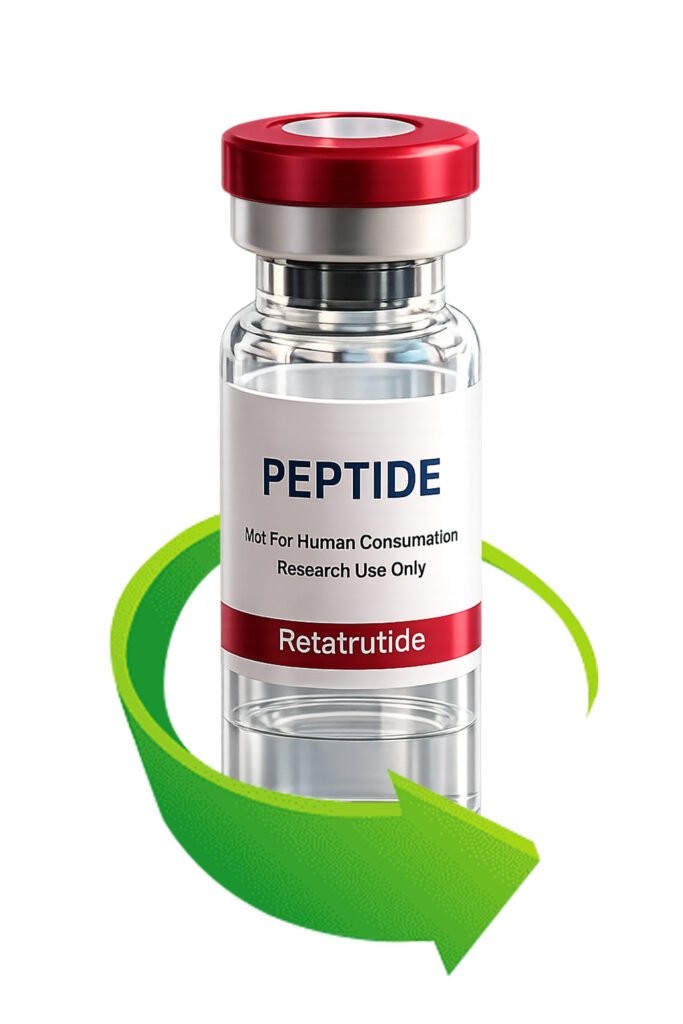
Gently Swirl
DO NOT shake the peptide to dissolve the lyophilized powder. Instead, gently swirl or rotate it to avoid damaging the fragile amino acid chains.
Gently Swirl
DO NOT shake the peptide to dissolve the lyophilized powder. Instead, gently swirl or rotate it to avoid damaging the fragile amino acid chains.
Volume Recommendations:
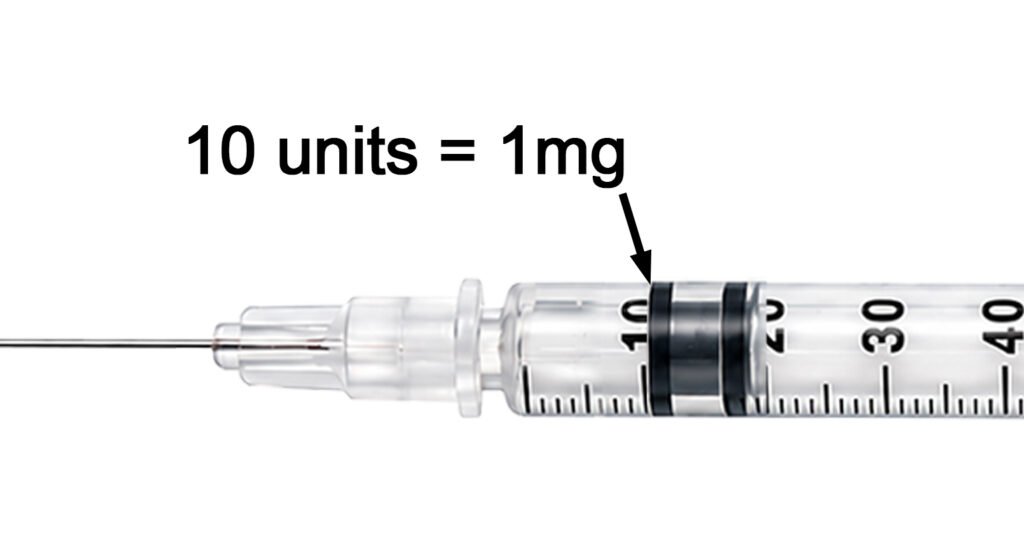
To make the math easy, it is typical to reconstitute 10mg of peptide with 1ml of BAC Water.
When done this way, 10 units of reconstituted peptide equals 1mg of peptide if using a U-100 insulin syringe (the most common subcutaneous syringe).
Exceptions To The Easy Volume Rule:
LARGER DOSED VIALS:
Most peptides come in a 3ml vial, but some have more than 30mg—like KLOW 80, for instance, which has 80mg of peptide. The max amount of BAC water that can be added to a 3ml vial is 3ml. In such cases, use the DOSAGE CALCULATION formula to determine how many units equals the desired milligram dosage.
SMALLER DOSES:
Sometimes dosages are in fractions of a milligram (i.e. micrograms), so the units drawn using the 1ml/10mg reconstitution ratio would be too small to effectively measure on the syringe.
For instance, if your dose is 250 micrograms (0.25mg), then a 1ml/10mg ratio would have you drawing 2.5 units into the syringe, which is a very small amount to measure accurately. You may, instead, double or triple the BAC volume used to reconstitute the peptide so that the 250 microgram dose looks like 5 or 7.5 units drawn, respectively—a volume much easier to see, and therefore measure, with the syringe.
Volume Recommendations:
To make the math easy, it is typical to reconstitute a 10mg vial of peptide with 1ml of BAC Water.
That way, 10 units of reconstituted peptide equals 1mg (if using a U-100 insulin syringe, the most common subcutaneous syringe).
Exceptions To The Easy Volume Rule:
LARGER DOSED VIALS:
Most peptides come in a 3ml vial, but some have more than 30mg—like KLOW 80, for instance, which has 80mg of peptide. The max amount of BAC water that can be added to a 3ml vial is 3ml. In such cases, use the DOSAGE CALCULATION formula to determine how many units equals the desired milligram dosage.
SMALLER DOSES:
Sometimes dosages are in fractions of a milligram (i.e. micrograms), so the units drawn using the 1ml/10mg reconstitution ratio would be too small to effectively measure on the syringe.
For instance, if your dose is 250 micrograms (0.25mg), then a 1ml/10mg ratio would have you drawing 2.5 units into the syringe, which is a very small amount to measure accurately. You may, instead, double or triple the BAC volume used to reconstitute the peptide so that the 250 microgram dose looks like 5 or 7.5 units drawn, respectively—a volume much easier to see, and therefore measure, with the syringe.