
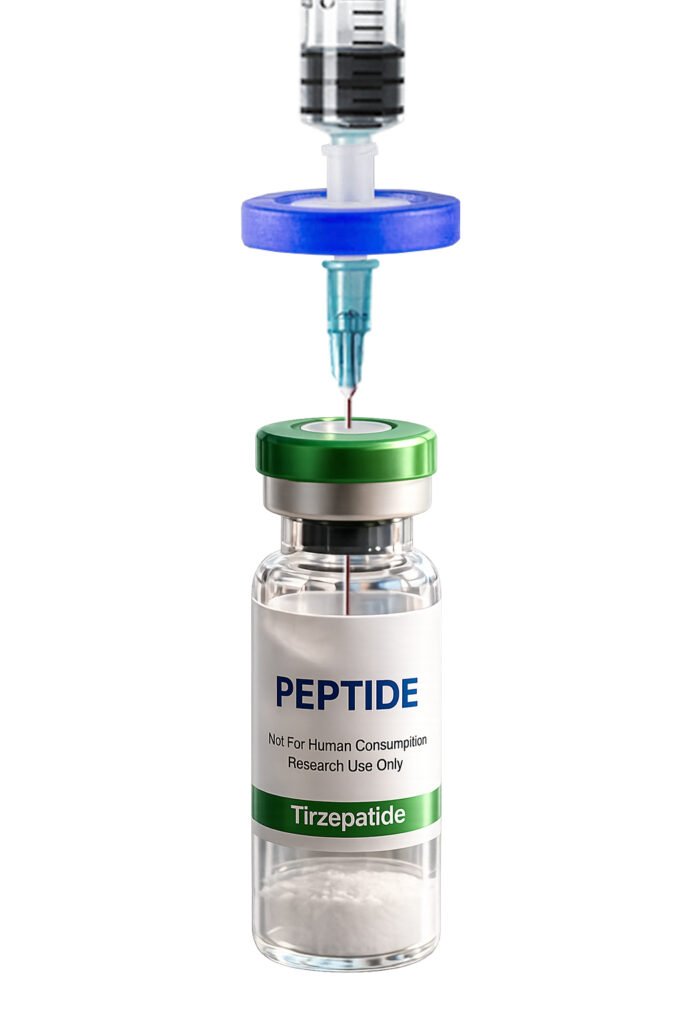
Filtering:
In the context of peptides, filtering is the process of straining all undesired particulates—including bacteria— from a recently reconstituted peptide.
Filtering:
In the context of peptides, filtering is the process of straining all undesired particulates—including bacteria— from a recently reconstituted peptide.
Is filtering necessary?
Yes! All peptides should be filtered before use. All medical professionals know this; doctors, infusion specialists, lab technicians, professional researchers, etc. They filter every peptide after reconstitution, regardless of its advertised purity.
Why?
Even though the vast majority of peptides will never contain undesirable particulates or bacteria, there's NO guarantee.
Lyophilized peptides do not contain a preservative like the 0.9% benzyl alcohol found in BAC water, which is only meant to prevent bacteria from forming in the BAC, not kill existing bacteria that may be found in a lyophilized peptide when added to it. Nor is it meant to kill bacteria introduced to the BAC or reconstituted peptide by practitioners using non-sterile techniques. For this reason, all peptides should be treated as though they have some undesirables in them, however unlikely.
Because peptides are injected subcutaneously, the strictest safety protocols demand absolute certainty that no particulates or bacteria exists.
But the COA said it was 99%+ pure!
Great. It better! But there's a catch. Prior to any peptide being tested, it must be filtered first to keep the HPLC or mass spectrometry machines working properly, as well as establish a clean baseline for testing the chemical's purity.
So, a COA report, only affirms the purity of a peptide POST-filtration.
If you're not filtering, you don't really know what you're injecting.
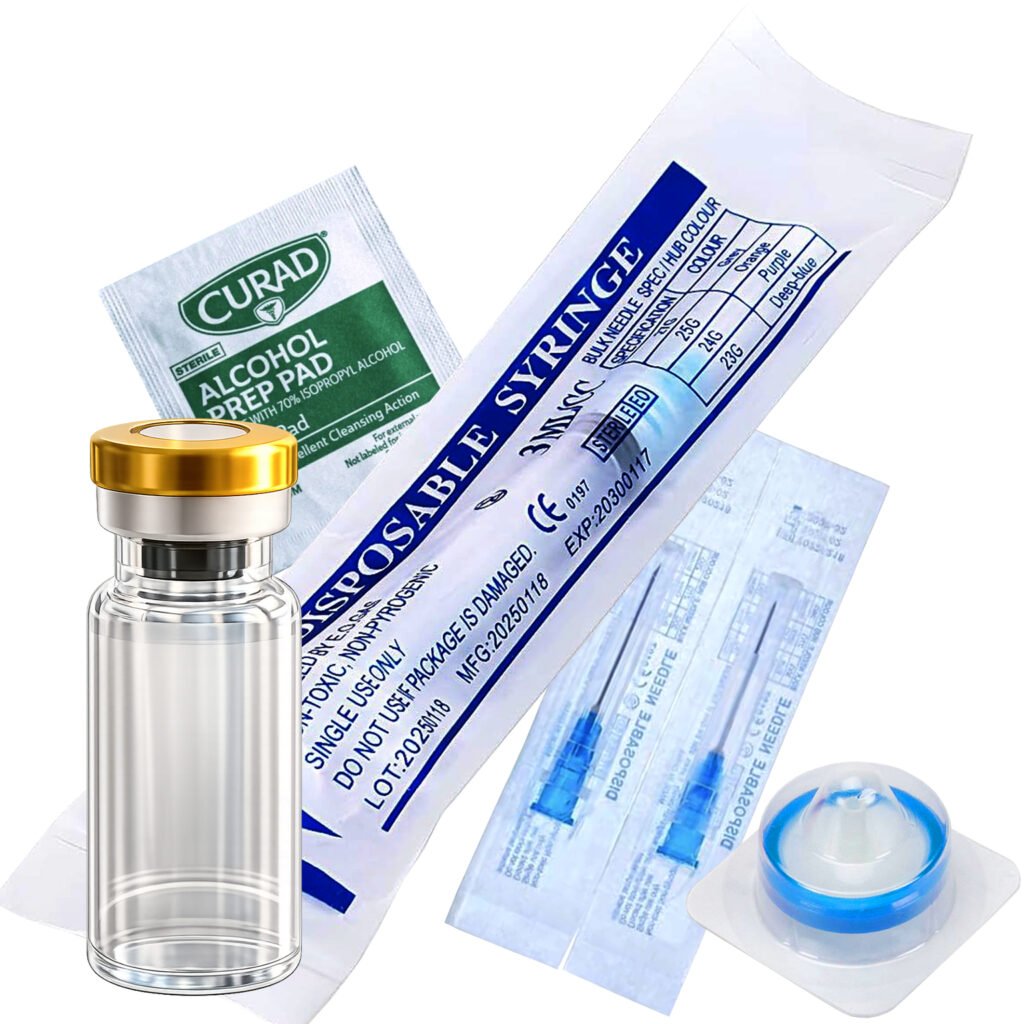
What's needed to properly filter?
• (1) Sterile 3ml Syringe, or larger
• (1) Sterile 0.22µm PES filter
• (2) Sterile Luer lock needles
• (1) Alcohol prep pad
• (1) Empty sterile vial, or the recently emptied BAC vial, as it is still sterile.
Storage requirements:
Reconstituted peptides must be strictly refrigerated (between 36°F and 46°F) and should NOT be frozen.
How to Filter:
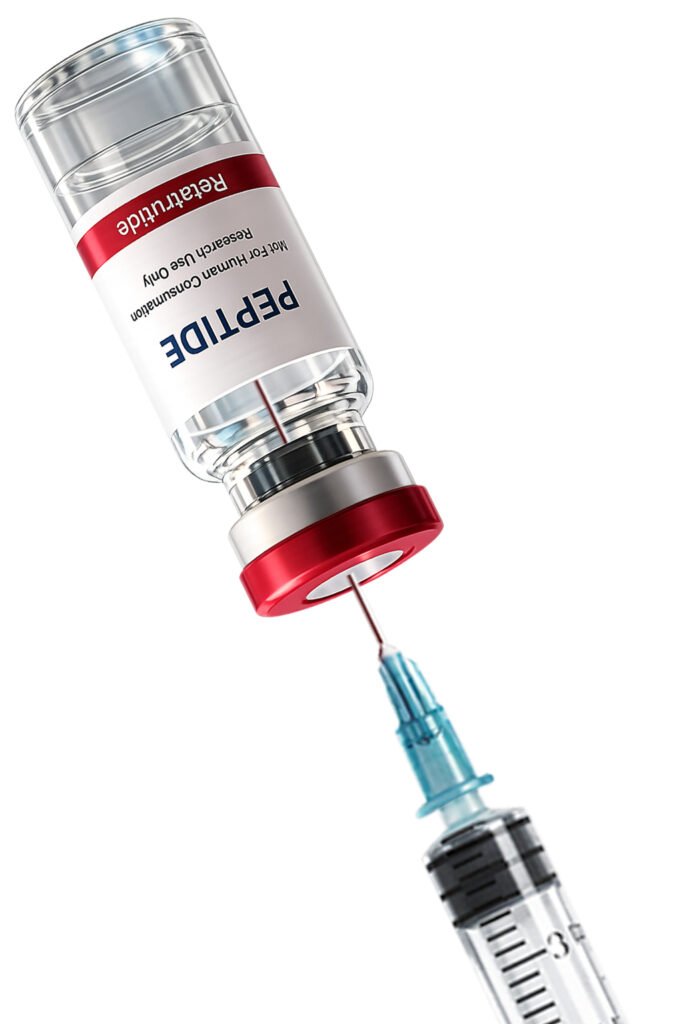
Withdraw The Reconstituted Peptide
• Using the same syringe and needle used to reconstitute, withdraw all the newly reconstituted and dissolved peptide from its vial.
Withdraw The Reconstituted Peptide
• Using the same syringe and needle used to reconstitute, withdraw all the newly reconstituted and dissolved peptide from its vial.
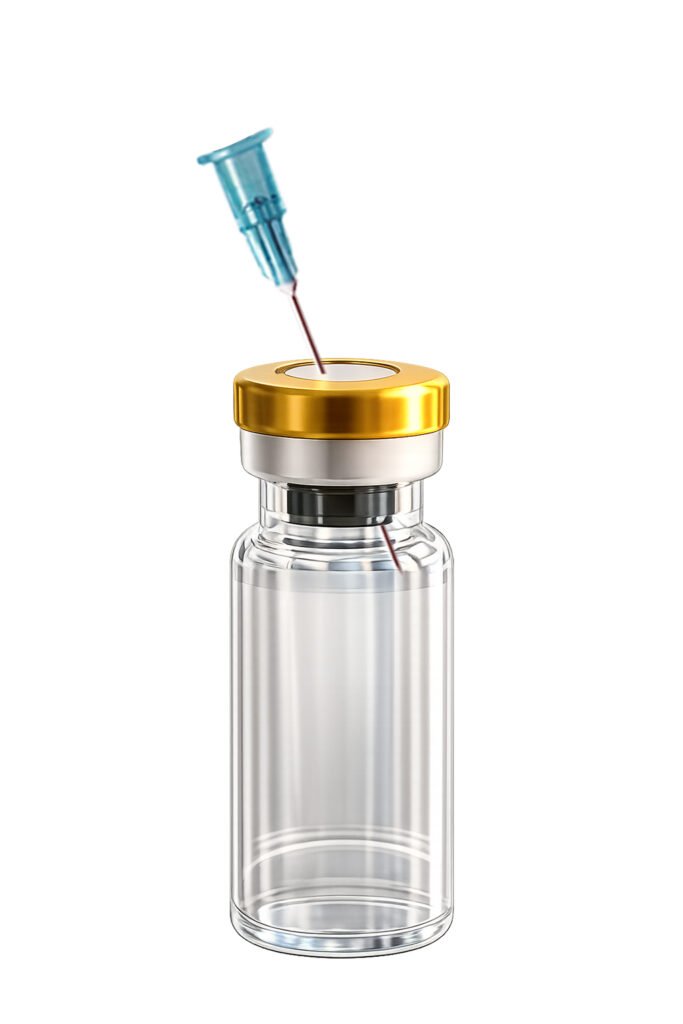
Vent The Empty Vial
• Sterilize the cap with the prep pad.
• Using one of the sterile needles, vent the empty sterile vial by inserting the needle just off center.
• Be sure the needle tip extends slightly below the rubber stopper to prevent the expulsion of peptide through the vent.
Vent The Empty Vial
• Sterilize the cap with the prep pad.
• Using one of the sterile needles, vent the empty sterile vial by inserting the needle just off center. Be sure the needle tip extends slightly below the rubber stopper to prevent the expulsion of peptide through the vent.
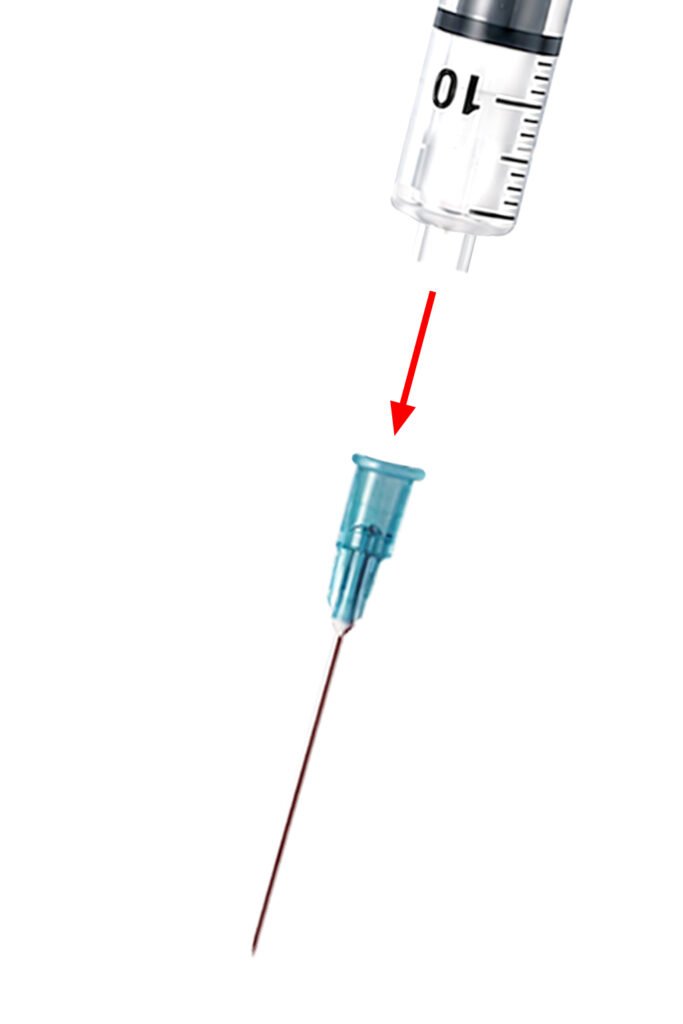
Remove The Reconstituting Needle
• Suck a little air into the syringe to recover any residual peptide from the needle.
• Then, cap, remove, and discard the needle.
Remove The Reconstituting Needle
• Suck a little air into the syringe to recover any residual peptide from the needle.
• Then, cap, remove, and discard the needle.
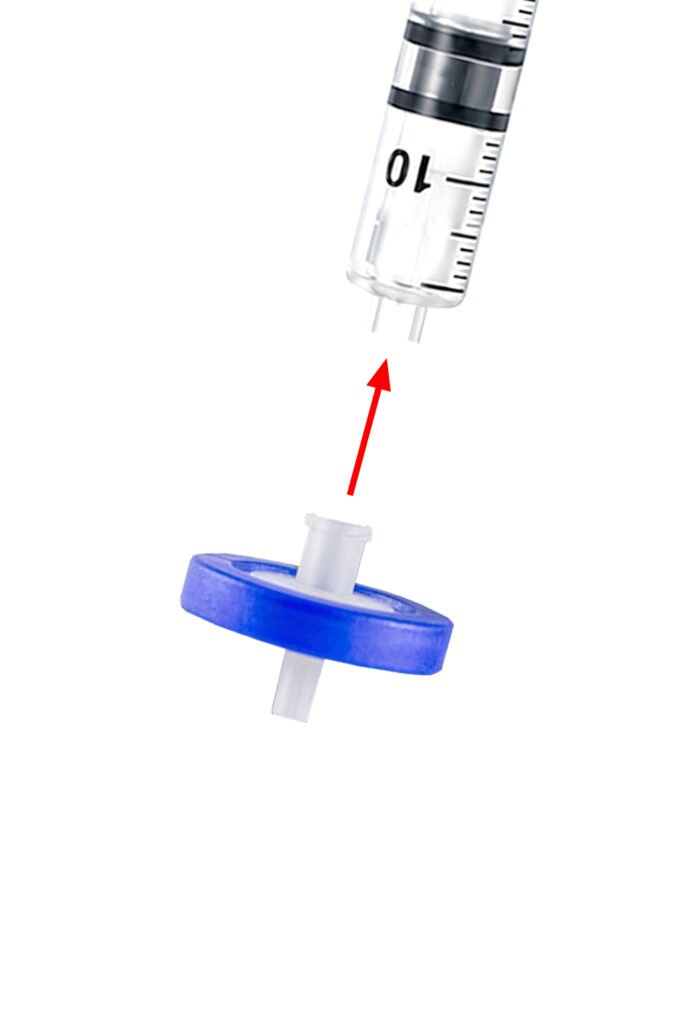
Attach The PES Filter
• Unwrap the filter.
• Without touching either end, attach the locking end onto the peptide-filled syringe.
Attach The PES Filter
• Unwrap the filter.
• Without touching either end, attach the locking end onto the peptide-filled syringe.
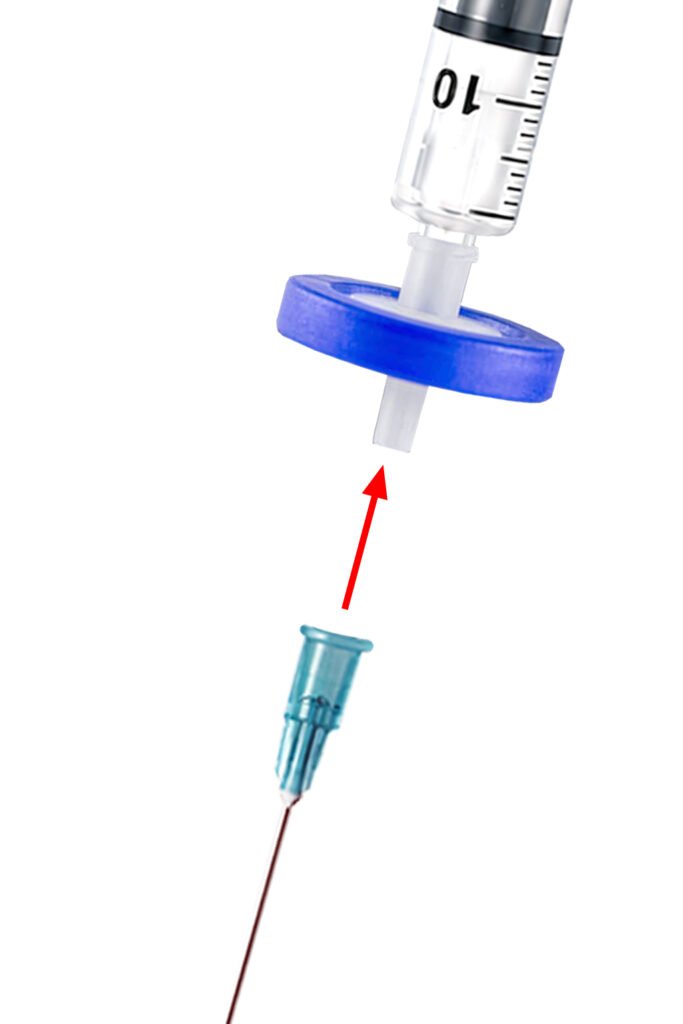
Attach The Last Sterile Needle
• Attach the last sterile needle to the sterile end of the PES filter.
Attach The Last Sterile Needle
• Attach the last sterile needle to the sterile end of the PES filter.
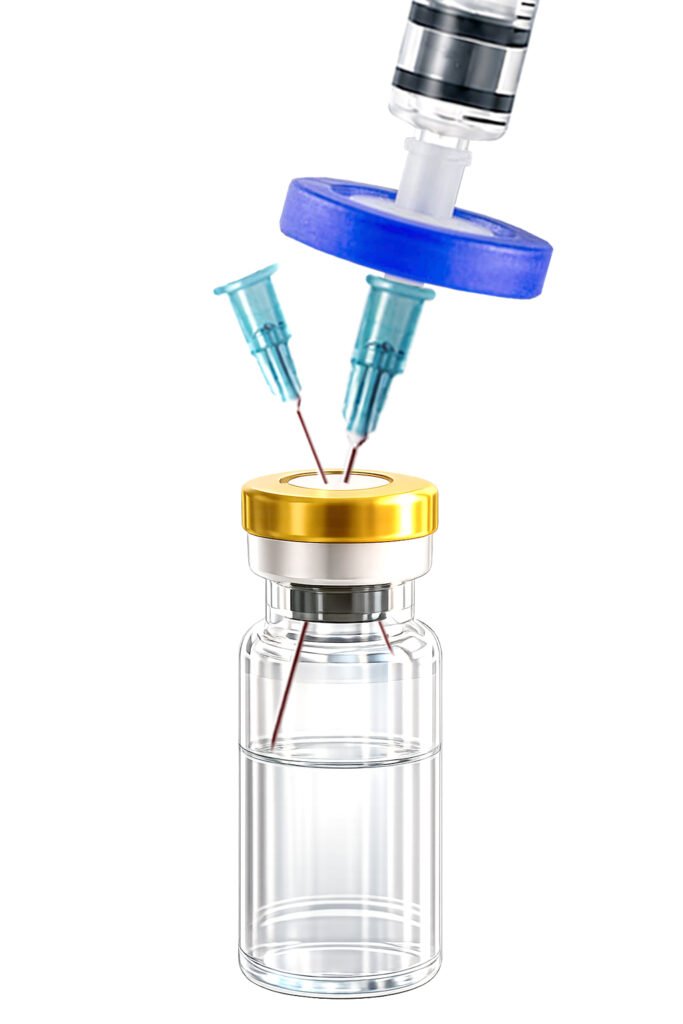
Filter The Peptide
• Insert the filtering needle into the empty sterile vial at an angle toward the glass.
• Slowly depress the plunger to filter the peptide.
• Be sure the rising fluid doesn't eject out of the venting needle.
Filter The Peptide
• Insert the filtering needle into the empty sterile vial at an angle toward the glass.
• Slowly depress the plunger to filter the peptide.
• Be sure the rising fluid doesn't eject out of the venting needle.
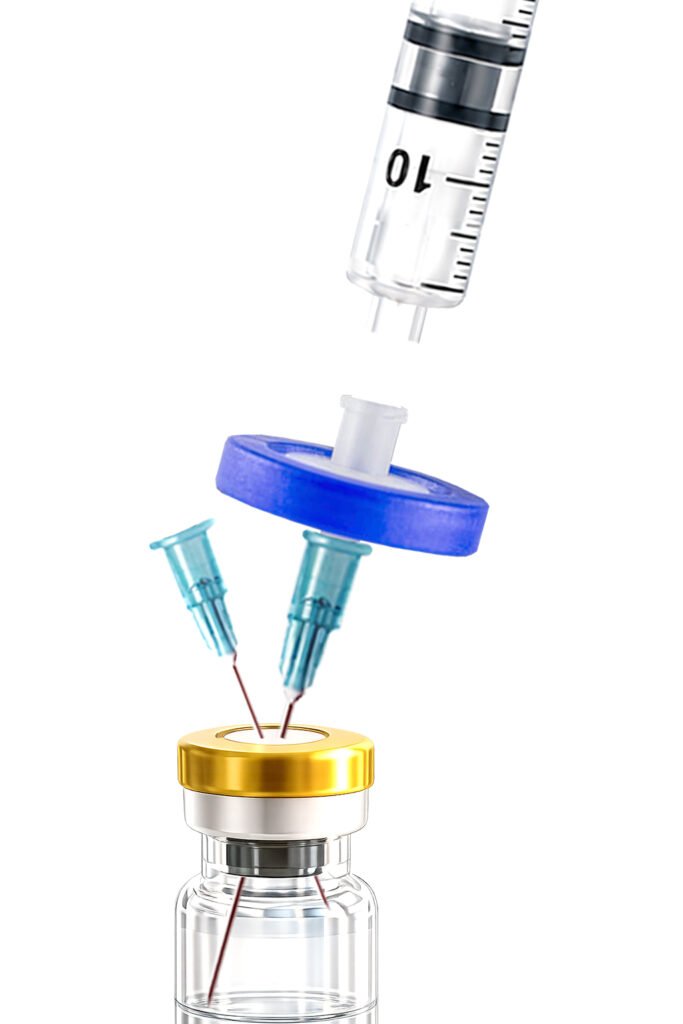
Expel Residual Peptide In Filter With Air
• Keeping filter and needle in the vial, remove the syringe from the filter.
• Draw some air into the syringe. Flick it so all the peptide drops to the bottom.
• Reconnect syringe to the filter.
• Depress a little air into the filter to remove any residual peptide.
Expel Residual Peptide In Filter With Air
• Keeping filter and needle in the vial, remove the syringe from the filter.
• Draw some air into the syringe. Flick it so all the peptide drops to the bottom.
• Reconnect syringe to the filter.
• Depress a little air into the filter to remove any residual peptide.
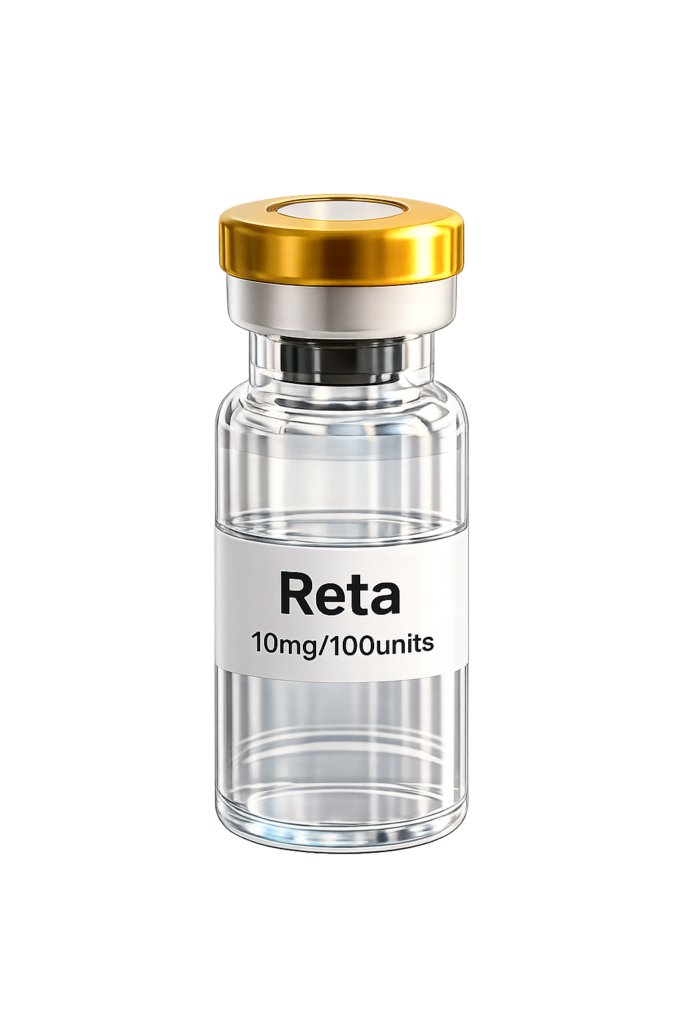
Label The Newly Filtered Peptide!
• Label the filtered peptide with the product name and concentration so dosing doesn't get confusing.
Label The Newly Filtered Peptide!
• Label the filtered peptide with the product name and concentration so dosing doesn't get confusing.