Protocols:
• Dose: 2.33mg once daily
• Cycle: 4-8 weeks
• Time off: 2-4 weeks
• Always filter after reconstitution
Protocols:
• Dose: 2.33mg once daily
• Cycle: 4-8 weeks
• Time off: 2-4 weeks
• Always filter after reconstitution
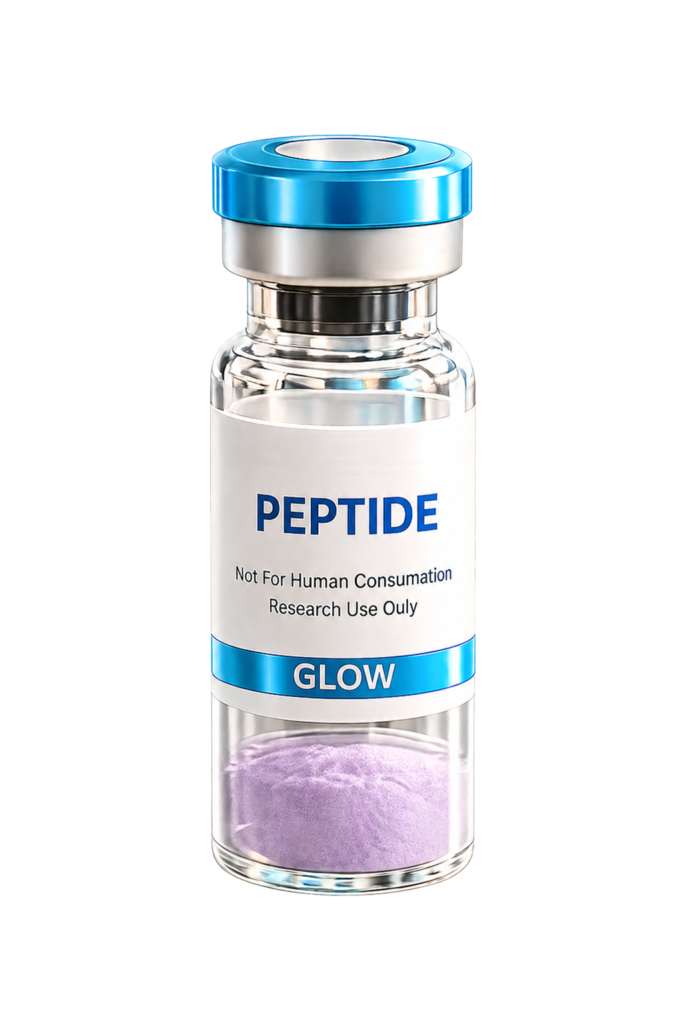
What is GLOW?
Glow peptide typically refers to a custom-compounded "stack" of three active peptides:
GHK-Cu, BPC-157, and TB-500—administered via daily subcutaneous injections.
It is designed to work from the inside out to stimulate collagen production, accelerate soft-tissue recovery, reduce inflammation, and improve skin and hair quality.
GLOW Benefits
The GLOW stack provides targeted, foundational improvements for your body:
• Skin Rejuvenation & Collagen Production: The GHK-Cu (Copper Peptide) signals your cells to significantly ramp up collagen and elastin production. This helps reduce the appearance of fine lines, improves skin elasticity, and promotes a brighter, more radiant complexion.
• Accelerated Tissue & Wound Healing: BPC-157 promotes the formation of new blood vessels and supports the repair of muscles, tendons, ligaments, and gastrointestinal tissue.
• Enhanced Mobility & Cellular Regeneration: TB-500 encourages cell migration and directs repair cells to where they are needed most. It helps increase flexibility, reduces swelling, and aids in joint and fascia support.
• Decreased Systemic Inflammation: All three peptides work together to control inflammation, making the blend highly effective for post-cosmetic procedure recovery, intense exercise recovery, and managing chronic discomfort.
GLOW Side Effects
Common reactions include localized injection site irritation, mild headaches, fatigue, nausea, and a temporary bluish skin tint.
The most common and reported side effects require specific awareness:
• Injection Site Reactions: Temporary stinging, redness, itching, or minor bruising at the injection site are the most frequent complaints.
• Dermatological Effects: The copper peptide (GHK-Cu) can make skin feel firm and tight. However, too high of a dose can result in a slightly blue tint on the skin.
• Systemic Adjustment: Mild headaches, temporary fatigue, and mild digestive upset (like nausea) are known to occur as the body adjusts to the peptide stack.
Important Considerations:
• Long-term safety data for the injectable GLOW stack does not exist, as these are compounded formulations.
• Individuals with copper metabolism disorders (like Wilson's disease) or G6PD deficiency should avoid these stacks entirely.
• Because these are cell growth stimulators, individuals with active or unknown cancers should avoid them.
Key Components of the GLOW Stack
• GHK-Cu (Copper Peptide): This naturally occurring copper-binding peptide is the primary ingredient responsible for skin rejuvenation. It signals cells to produce collagen and elastin, improves skin firmness, and helps heal sun damage or scarring. It is also linked to stronger hair follicles.
• BPC-157 (Body Protection Compound): Derived from gastric proteins, BPC-157 is widely used in regenerative medicine for its ability to reduce inflammation and accelerate the healing of tendons, ligaments, muscles, and the gut lining.
• TB-500: A synthetic version of the naturally occurring Thymosin beta-4 protein, this peptide promotes cellular regeneration, tissue repair, and flexibility by aiding cell migration and structure.
How GLOW Works
Unlike traditional serums or creams that only treat the surface layer of skin, GLOW peptide therapy works at a cellular level by sending signals that encourage the body to repair itself. It is frequently utilized in anti-aging, wellness, and plastic surgery recovery programs for patients seeking overall vitality, radiant skin, and reduced recovery times following procedures or intense workouts.
Half Life
The "GLOW" peptide is not a single compound, but rather an experimental stack consisting of three primary regenerative peptides: BPC-157, TB-500, and GHK-Cu. Because the formula is a blend, the overall half-life is component-dependent, ranging broadly from 2 to 6 hours.
The specific pharmacokinetic profile for each peptide varies:
• BPC-157: Has a plasma half-life of under 30 minutes, though its biological and therapeutic effects on tissue repair are known to persist for hours.
• TB-500 (Thymosin Beta-4): Features a longer half-life (often estimated at around 4 to 6 hours), which allows for prolonged cellular regeneration and anti-inflammatory activity.
• GHK-Cu (Copper Peptide): Degrades quickly as its copper ions are released and the peptide fragments form, with an estimated active window of about 2 to 4 hours.
Because these active windows are relatively short, maintaining a consistent therapeutic concentration typically requires daily or twice-daily dosing. The formulation is frequently utilized in anti-aging and wellness protocols for 8 to 12 weeks at a time to promote collagen production and joint recovery.