
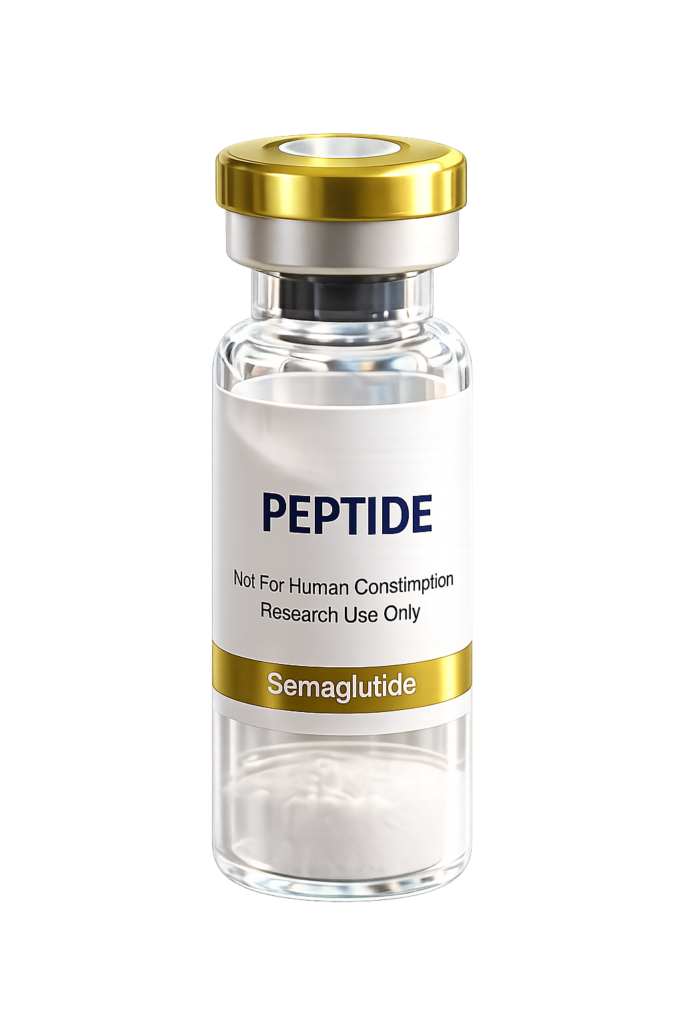
Protocols:
• Start: 0.25mg weekly
• Maintenance: Up to 2.4mg weekly
• Always filter after reconstitution
• See "Important Note" under Benefits section
Protocols:
• Start: 0.25mg weekly
• Maintenance: Up to 2.4mg weekly
• Always filter after reconstitution
• See "Important Note" under Benefits section
Semaglutide Benefits
The most evidence-supported semaglutide benefits include:
• Clinically significant weight reduction: 12–17% mean body weight loss across the STEP programme, sustained over 2+ years with continued use.[1][4][5][6]
• Cardiovascular risk reduction: 20% reduction in major adverse cardiovascular events (SELECT trial) — a benefit independent of diabetes status.[3]
• Appetite regulation: reduced hunger, cravings, and spontaneous caloric intake via central GLP-1 receptor activation.[7]
• Glycaemic improvement: meaningful HbA1c reductions in type 2 diabetes, with Ozempic approved for this indication globally.[2]
• Emerging indications: positive signals in knee osteoarthritis (reduced pain and improved function),[12] heart failure (HFpEF),[11] kidney protection,[10] and potential metabolic-associated fatty liver disease applications.
• Oral formulation available: oral semaglutide (Rybelsus, and newer high-dose 25mg/50mg formulations in trials) provides an alternative to the injectable form, with the OASIS programme showing weight loss approaching that of the subcutaneous formulation.[13][14]
Important Note:
Retatrutide, like all GLP agonists, produces best results when accompanied with intermittent fasting (not intaking more than 5 calories total between 9pm and 2 pm the following day).
Benefits of Intermittent Fasting:
• Metabolic Switch: Your body shifts from using blood sugar to burning fat and ketones for fuel.
• Lower Insulin: Blood insulin levels drop significantly, which helps make body fat more accessible to burn.
• Cell Repair: Extended fasting triggers autophagy, a cellular cleanup process that removes damaged cells and waste.
• Weight Loss: Limits your daily eating window so you naturally eat fewer calories and lose body fat.
• Better Blood Sugar: Lowers fasting glucose and reduces insulin resistance, which helps manage pre-diabetes and type 2 diabetes.
• Heart Health: Helps lower blood pressure, resting heart rate, and cholesterol levels.
• Less Inflammation: Reduces chronic inflammation markers linked to aging and disease.
The above mentioned benefits to intermittent fasting are not achieved by merely eating smaller sized portions throughout the day.
Because GLPs make intermittent fasting so easy, it's a huge waste not to incorporate it into the GLP regiment.
Semaglutide Side Effects
The semaglutide side effects and side effects of semaglutide profile is well-characterised across large clinical trials. For Ozempic side effects and side effects of Ozempic queries: the safety data comes from the same compound across different brand contexts.
Commonly reported issues include:
• Gastrointestinal effects: nausea (most common, typically dose-dependent and often improving over weeks), diarrhoea (semaglutide diarrhoea (semaglutide diarrhea)), vomiting, constipation, and abdominal discomfort. These are the most frequent reason for discontinuation in trials.[1][2][15]
• “Ozempic face”: the widely discussed Ozempic face phenomenon refers to facial volume loss associated with significant overall weight reduction — not a direct pharmacological effect. It occurs with any rapid weight loss and is proportional to the degree of fat mass reduction.[1]
• Gallbladder events: increased incidence of cholelithiasis (gallstones) has been observed, consistent with rapid weight loss from any cause.
• Pancreatitis signals: rare but monitored. Large-scale safety reviews have not confirmed a causal increase above background rates.[15]
• Dental and oral concerns: Ozempic teeth queries relate to anecdotal reports of dental issues, potentially linked to increased gastric acid exposure from GI side effects — though systematic evidence is limited.
For semaglutide long-term side effects (also searched as semaglutide long term side effects) and how long do semaglutide side effects last: the STEP 5 (2-year) and SELECT (4-year) data suggest GI side effects typically attenuate over time, while serious adverse events remain rare and comparable to placebo in long-duration studies.[3][6][15] The question who should not take semaglutide is best addressed by qualified healthcare providers, as contraindications include personal or family history of medullary thyroid carcinoma and MEN2 syndrome.
What is Semaglutide?
Semaglutide is a GLP-1 receptor agonist — a synthetic analog of the human glucagon-like peptide-1 hormone — studied extensively in weight management, type 2 diabetes, and cardiovascular risk reduction contexts.[1][2][3] It is one of the most clinically validated peptide-based compounds in modern medicine.
You may know it better by its brand names: Ozempic (for type 2 diabetes management), Wegovy (for weight management), and Rybelsus (the oral semaglutide formulation). All contain the same semaglutide peptide — the difference is indication, formulation, and approved context. For those asking what is Ozempic: it is simply semaglutide brand name marketed by Novo Nordisk for glycaemic control.
What does Semaglutide actually do?
What does Ozempic do and does semaglutide work are among the most common questions. The evidence is unambiguous: semaglutide produces clinically significant weight reduction and glycaemic improvements in large, well-designed randomised controlled trials.[1][2][3][4]
Useful practical markers from the research include:
• Weight trajectory: the STEP 1 trial demonstrated a mean of approximately 14.9% body weight reduction over 68 weeks versus 2.4% with placebo.[1]
• Appetite regulation: measurable reductions in hunger, food cravings, and energy intake — the core of semaglutide weight loss, semaglutide for weight loss, and Ozempic weight loss mechanisms.[7]
• Glycaemic control: significant HbA1c reductions in type 2 diabetes populations (STEP 2 and SUSTAIN programme).[2]
• Cardiovascular risk reduction: the landmark SELECT trial demonstrated a 20% reduction in major adverse cardiovascular events (MACE) in people with obesity but without diabetes.[3][8]
Unlike many compounds discussed in peptide research, semaglutide has a depth of human clinical evidence that is exceptional — including multiple Phase III trials, long-term extension data, and regulatory approvals across major markets.
How Semaglutide Works
Understanding how does semaglutide work (or how does Ozempic work / semaglutide mechanism of action) starts with the GLP-1 pathway. Semaglutide mimics the human GLP-1 hormone but with structural modifications that dramatically extend its half-life — allowing once-weekly administration rather than the minutes-long activity of native GLP-1.
The semaglutide mechanism of action involves three interconnected pathways:
• Appetite suppression: GLP-1 receptor activation in the hypothalamus reduces hunger signals and increases satiety, leading to spontaneous caloric reduction.[7]
• Gastric emptying: slowed gastric motility prolongs fullness after meals — a key contributor to the Ozempic weight loss effect.
• Insulin regulation: glucose-dependent insulin secretion is enhanced while glucagon is suppressed, improving glycaemic control without the hypoglycaemia risk seen with some older diabetes treatments.[2]
Half Life
Semaglutide has an elimination half-life of approximately one week (~168 hours) — which is what enables once-weekly administration and distinguishes it from earlier GLP-1 agonists like liraglutide (half-life ~13 hours, requiring daily administration).
This extended half-life is achieved through structural modifications: a fatty acid side chain that promotes albumin binding, plus amino acid substitutions that resist degradation by dipeptidyl peptidase-4 (DPP-4). The practical result is stable plasma concentrations with minimal peak-trough variation throughout the week.
For how long does semaglutide take to work: appetite effects are typically noticeable within the first weeks, but full weight-loss trajectories in trials developed over 12–20 weeks of titration. Glycaemic improvements can begin earlier.
References
1. Wilding JPH, et al. Once-Weekly Semaglutide in Adults with Overweight or Obesity. N Engl J Med. 2021;384(11):989-1002. PMID: 33567185. PubMed.
2. Davies M, et al. Semaglutide 2.4 mg once a week in adults with overweight or obesity, and type 2 diabetes. Lancet. 2021;397(10278):971-984. PMID: 33667417. PubMed.
3. Lincoff AM, et al. Semaglutide and Cardiovascular Outcomes in Obesity without Diabetes. N Engl J Med. 2023;389(24):2221-2232. PMID: 37952131. PubMed.
4. Wadden TA, et al. Effect of Subcutaneous Semaglutide vs Placebo as an Adjunct to Intensive Behavioral Therapy on Body Weight. JAMA. 2021;325(14):1403-1413. PMID: 33625476. PubMed.
5. Rubino D, et al. Effect of Continued Weekly Subcutaneous Semaglutide vs Placebo on Weight Loss Maintenance. JAMA. 2021;325(14):1414-1425. PMID: 33755728. PubMed.
6. Garvey WT, et al. Two-year effects of semaglutide in adults with overweight or obesity: the STEP 5 trial. Nat Med. 2022;28(10):2083-2091. PMID: 36216945. PubMed.
7. Blundell J, et al. Effects of once-weekly semaglutide on appetite, energy intake, control of eating, food preference and body weight in subjects with obesity. Diabetes Obes Metab. 2017;19(9):1242-1251. PMID: 28266779. PubMed.
8. Lingvay I, et al. Long-term weight loss effects of semaglutide in obesity without diabetes in the SELECT trial. Nat Med. 2024;30(7):2049-2057. PMID: 38740993. PubMed.
9. Rodriguez PJ, et al. Semaglutide vs Tirzepatide for Weight Loss in Adults With Overweight or Obesity. JAMA Intern Med. 2024;184(9):1056-1064. PMID: 38976257. PubMed.
10. Colhoun HM, et al. Long-term kidney outcomes of semaglutide in obesity and cardiovascular disease in the SELECT trial. Nat Med. 2024;30(7):2058-2066. PMID: 38796653. PubMed.
11. Kosiborod MN, et al. Semaglutide in Patients with Heart Failure with Preserved Ejection Fraction and Obesity. N Engl J Med. 2023;389(12):1069-1084. PMID: 37622681. PubMed.
12. Bliddal H, et al. Once-Weekly Semaglutide in Persons with Obesity and Knee Osteoarthritis. N Engl J Med. 2024;391(17):1573-1583. PMID: 39476339. PubMed.
13. Knop FK, et al. Oral semaglutide 50 mg taken once per day in adults with overweight or obesity (OASIS 1). Lancet. 2023;402(10403):705-719. PMID: 37385278. PubMed.
14. Aroda VR, et al. Oral Semaglutide at a Dose of 25 mg in Adults with Overweight or Obesity. N Engl J Med. 2025. PMID: 40934115. PubMed.
15. Singh G, et al. Safety of Semaglutide. Front Endocrinol (Lausanne). 2021;12:645563. PMID: 34305810. PubMed.